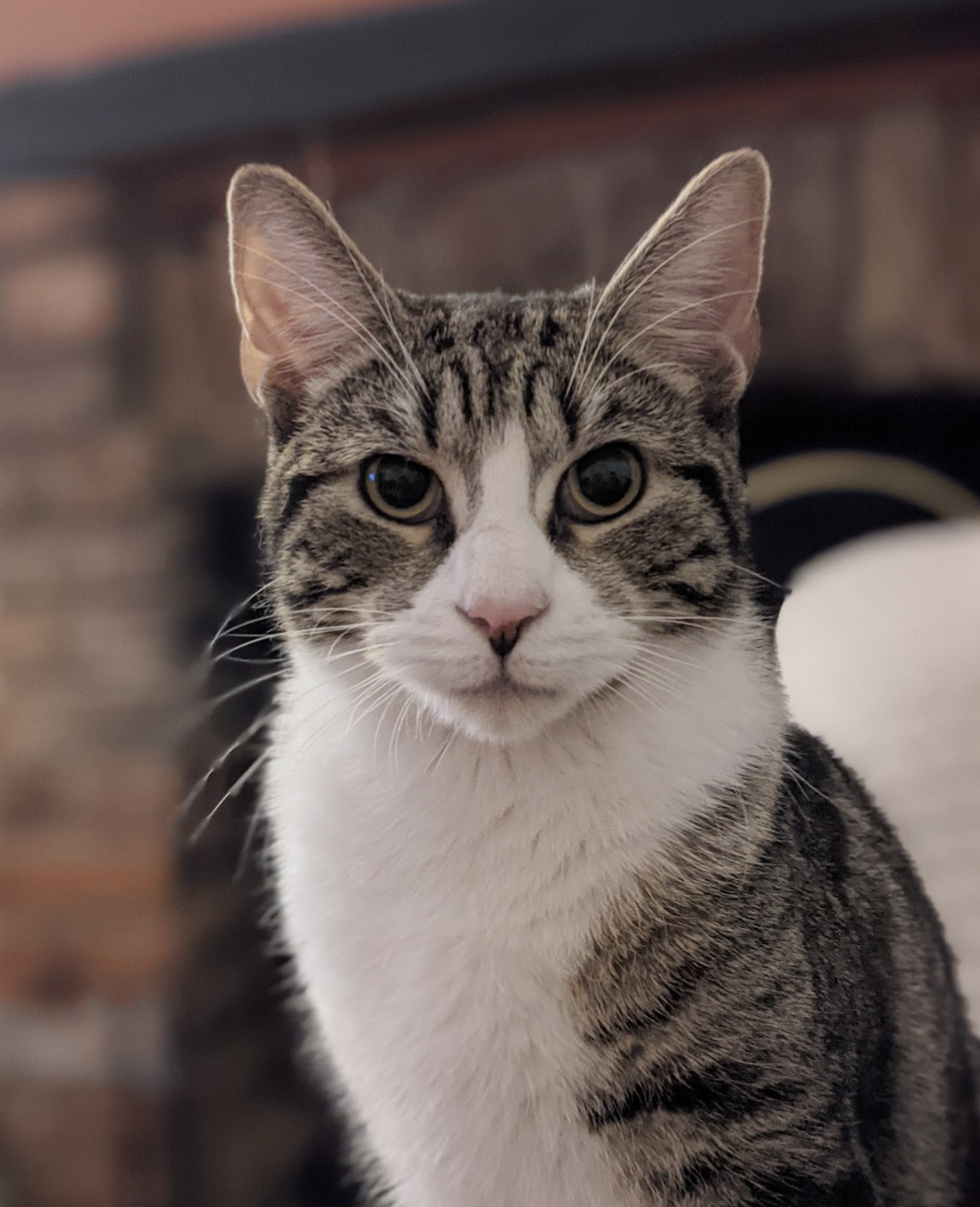
Designing for Winston
A product design case study about the hardest kind of user research. The kind where you can't ask anything at all.
Every design process starts with understanding your user. You run interviews, send surveys, observe behaviour and ask people why they do what they do.
Now imagine none of that is available.
No interviews. No surveys. No feedback.
Your user is right in front of you every day and you still can't ask them anything. All you can do is watch, form hypotheses and find out if you were right by what they do next.
That's Winston. And this is what five years of designing for him taught me about designing for anyone.
Designing for Winston — Five Year Timeline
The problem
I got a cat who turned out to be nothing like I expected. He doesn't want to be held or pet and isn't interested in most things designed for cats. If he doesn't get what he needs during the day he will absolutely make that your problem at 3am. The thing is I couldn't ask him what he needed. I could only watch, try things, get it wrong and try again. That's what this is about. Not just Winston but what happens when you can't ask your user anything at all.
Our user:
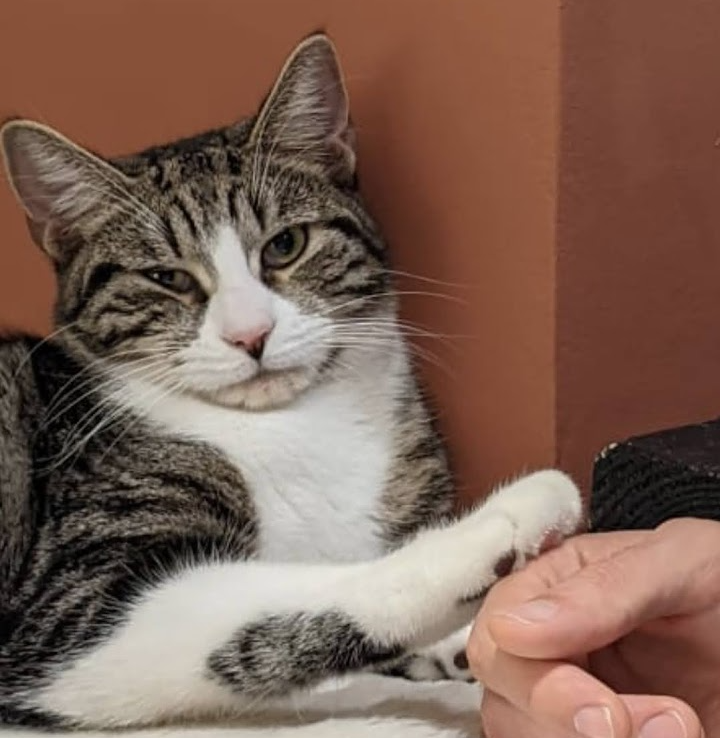
Name: Winston, Age 5, Rescue cat, Extremely opinionated.
Winston likes being around people but don't try and touch him. He's curious about everything and plays only with specific toys in a specific way. He eats only dry chicken food and has strong feelings about which chair he sits in on any given day. He's not difficult, he just knows what he wants and the problem is he can't tell you what that is.
Some things never change while other things shift constantly depending on season, temperature or something I'll never fully identify. At 4am he becomes a completely different cat. Suddenly affectionate and happy to be near you but by morning he's back to normal. You learn pretty quickly to stop trying to make that make sense and just design around it.
After five years there are still open questions. Would he be happier with a companion? Is there a toy I haven't found yet? Would outdoor access solve the boredom or just move it somewhere else? Some questions stay open and that's not a gap in the research. That's just the reality of designing for a real user.
Research
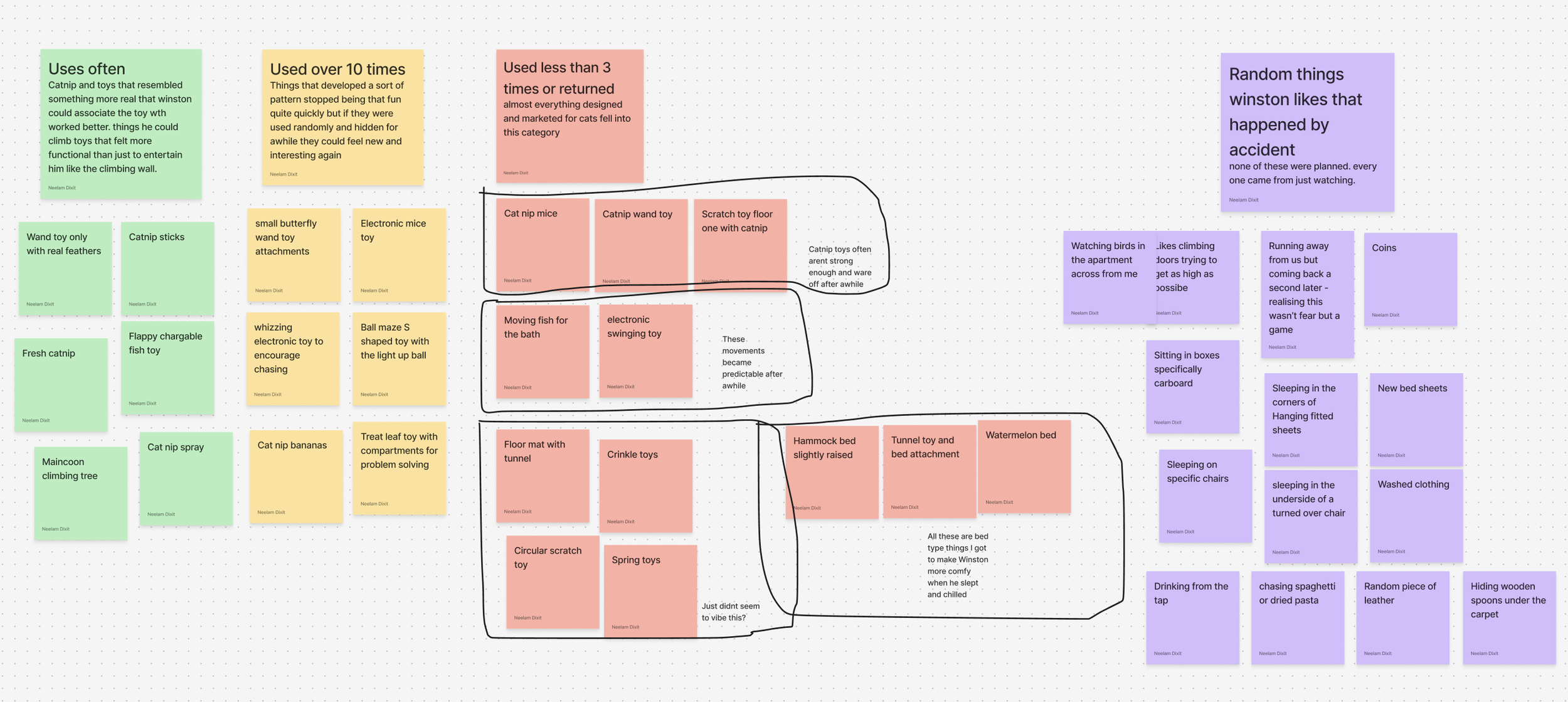
There was no formal process here. Winston lives with me and observation just meant paying attention over a long period of time. What that produced was this board. Everything I tried, everything that failed, everything that worked and the things he responded to that nobody planned for. That last category turned out to be the most useful of all.
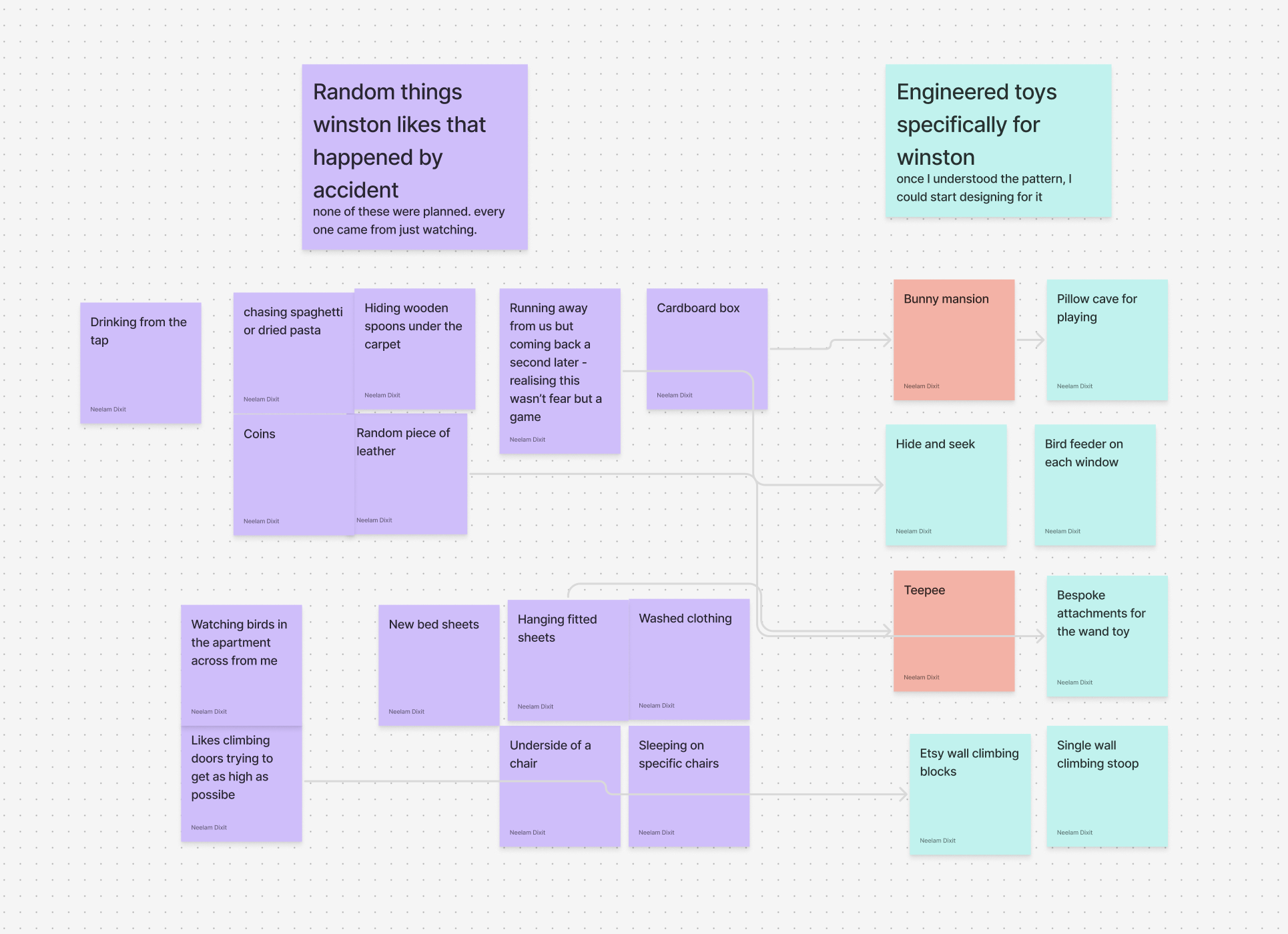
From research to design
The research board started to show patterns I could actually work with. Winston liked climbing, watching birds, hiding and chasing things. He responded to things that felt unpredictable and real. He ignored almost everything designed and marketed for cats. With that I had enough to start making decisions.
What the research actually showed
Five patterns emerged from everything on that board.
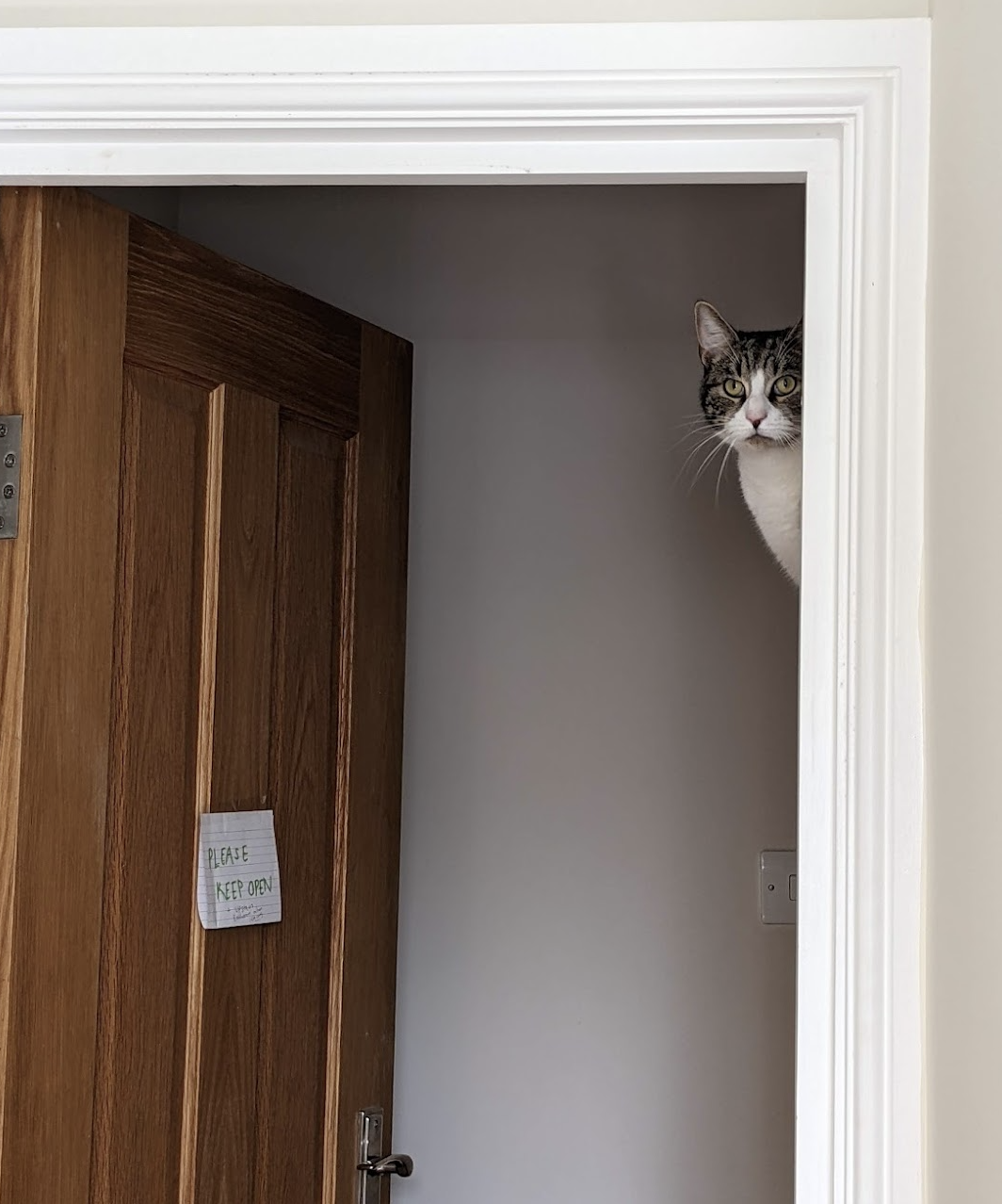
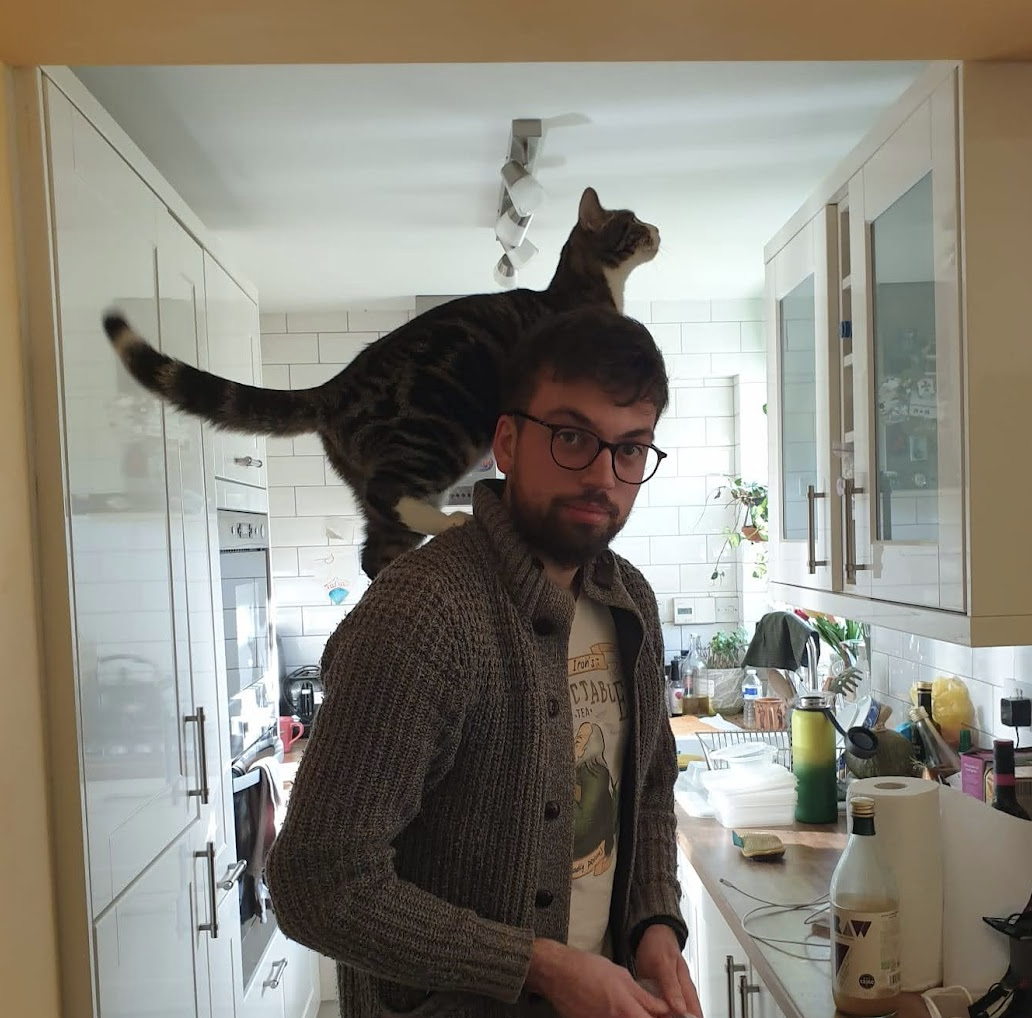
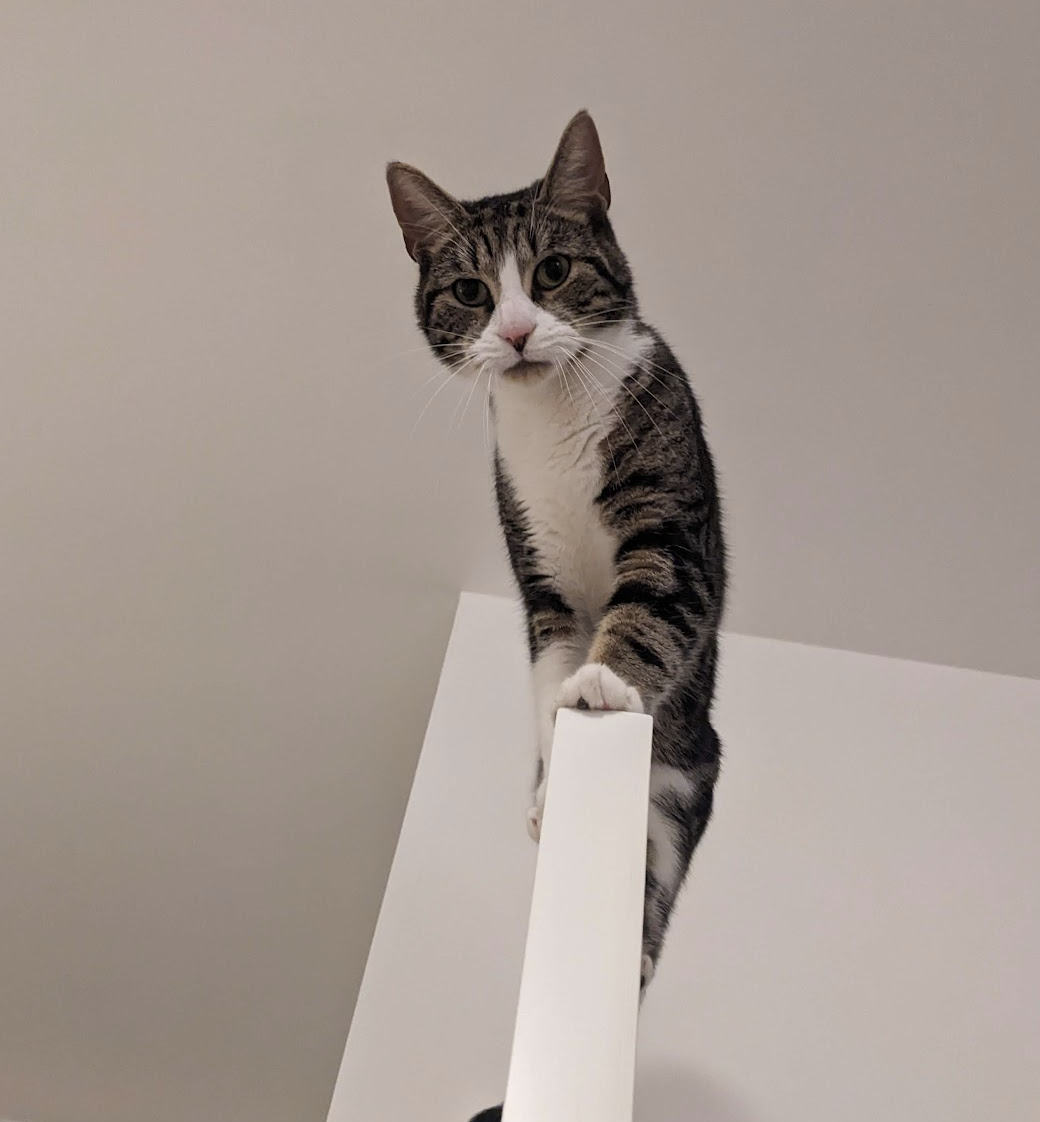
Vertical space matters. Winston consistently sought height across every environment he's lived in. Doors, shelves, the tops of things. This never changed.
Realistic unpredictable movement beats mechanical toys. Anything with a fixed or repetitive pattern lost his interest fast. The toys that worked felt alive in a way the electronic ones never did.
Hiding is part of how he plays. Winston doesn't chase from an open space. He needs somewhere to hide and observe before he engages. Remove that and the play doesn't work.
Environmental changes worked better than products. Almost nothing marketed for cats made the green column. The things that worked were changes to his surroundings not things bought for him.
Iteration
The cat wall
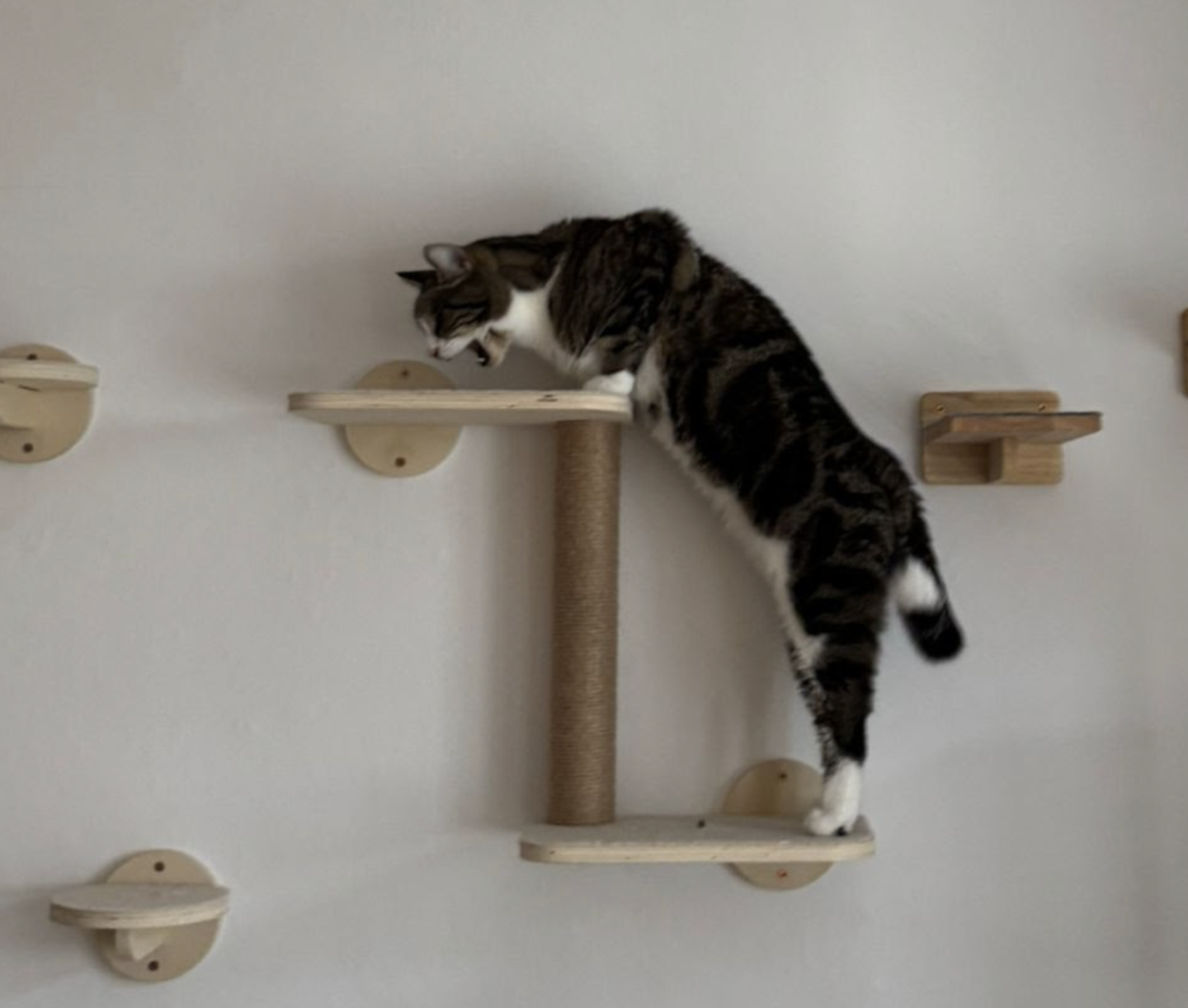
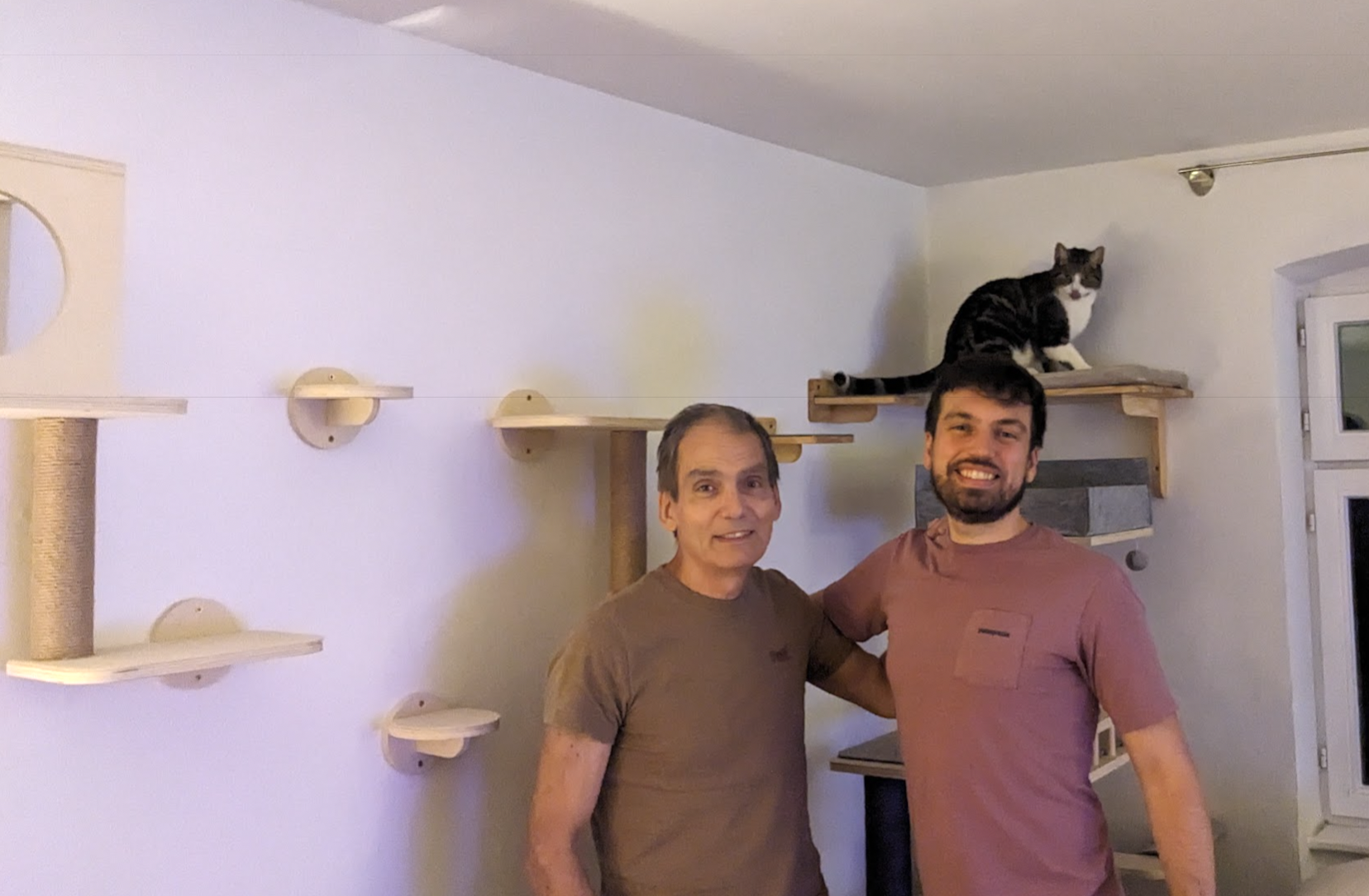
Winston climbed doors and always wanted to be higher up. The smaller cat towers I'd tried before stopped working once he got bigger and couldn't sit on them comfortably. A cat wall felt like the right solution. It gave him height, somewhere to survey the room and connected to everything I knew he liked about climbing.
The first version didn't work. The shelves were too small for him to settle on comfortably. He'd get up there and have nowhere to land so he'd come straight back down. He needed a reason to stay up there and without a comfortable place to settle he didn't have one.
I added a larger perch sized properly for him that connected into the existing wall. Then I trained him onto it using treats, essentially onboarding him onto something he had no reason to use yet. It worked. He started using it more and more and it became a reliable part of how he spends his time.
Even when you build the right thing you still have to bring your user with you.
The teepee
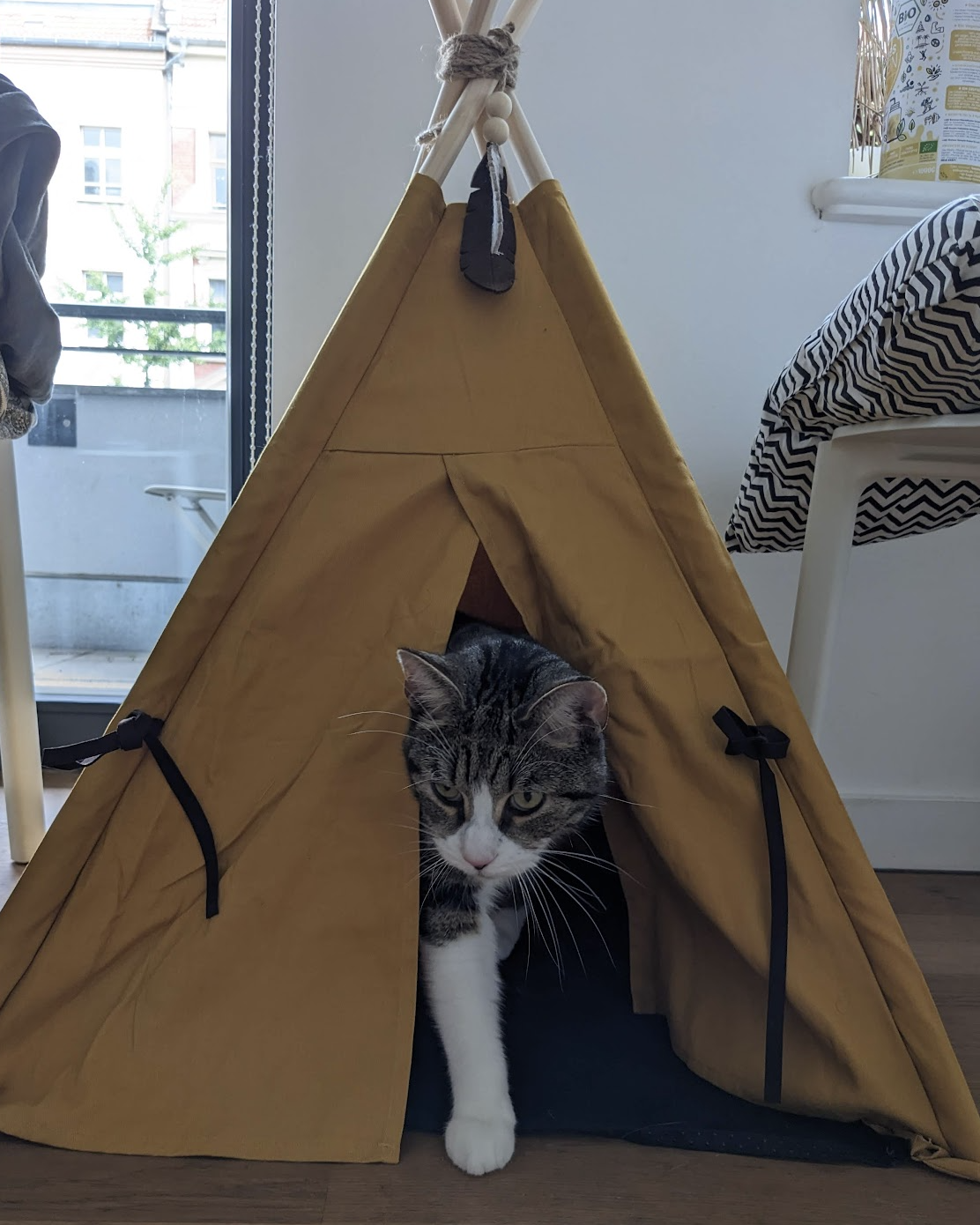
The logic was genuinely sound. The red column had already told me what didn't work. Soft beds, hammocks, tunnel toys, the watermelon bed. Everything cosy and enclosed had failed. But the purple column showed something different. Winston sleeping in specific chairs, wrapping himself in hanging sheets, gravitating toward new bed sheets. There was a clear pattern around fabric and enclosed spaces and I had two separate research threads pointing at the same conclusion.
The teepee wasn't soft or cosy. It was firm, it was on the floor and it gave him somewhere to go that wasn't a bed. It made complete sense. I bought it, washed it, put catnip on it, tried to make it feel familiar. He used it once.
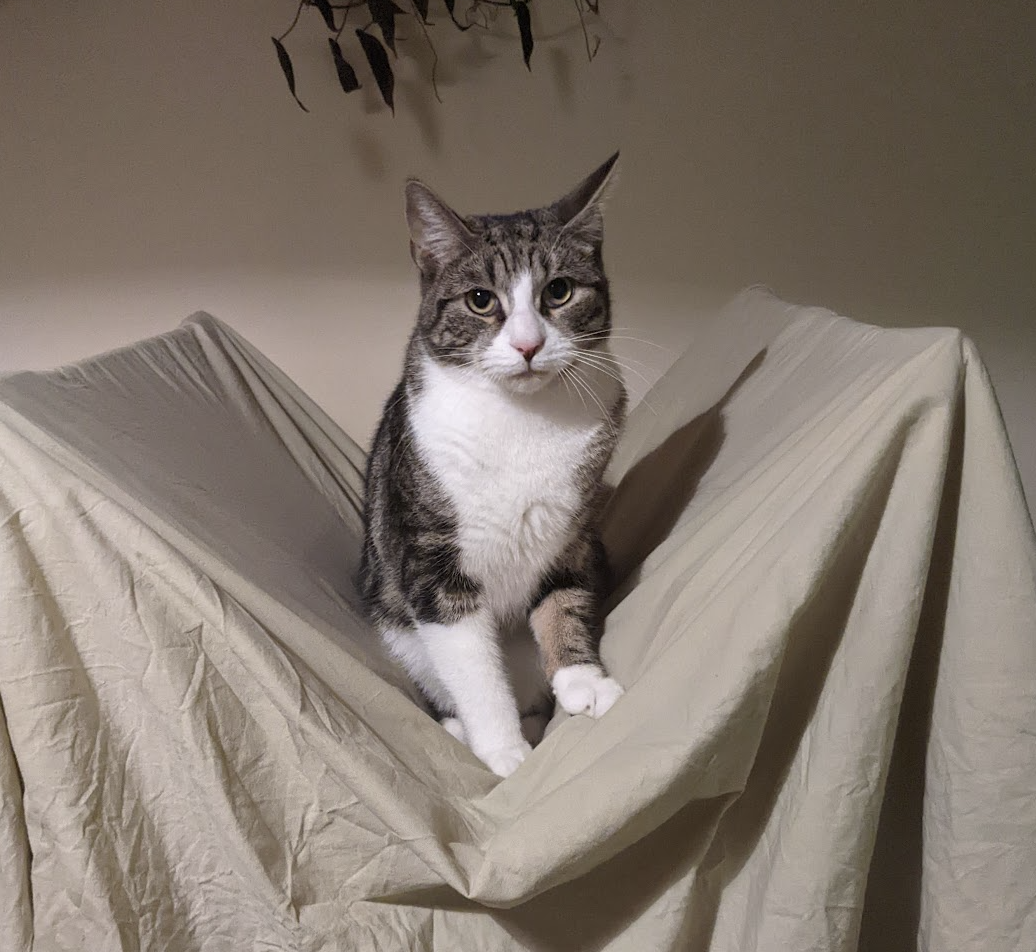
What I'd missed was that the sheets weren't about enclosure or fabric at all. Winston liked them because of the coolness of clean cotton against his body. That's not something the research could have told me. I had a well reasoned hypothesis built on real observations and it was still wrong. The only way to find that out was to build the wrong thing.
Any product team that has spent weeks on a feature and watched users ignore it will recognise this feeling exactly.
The pillow fort
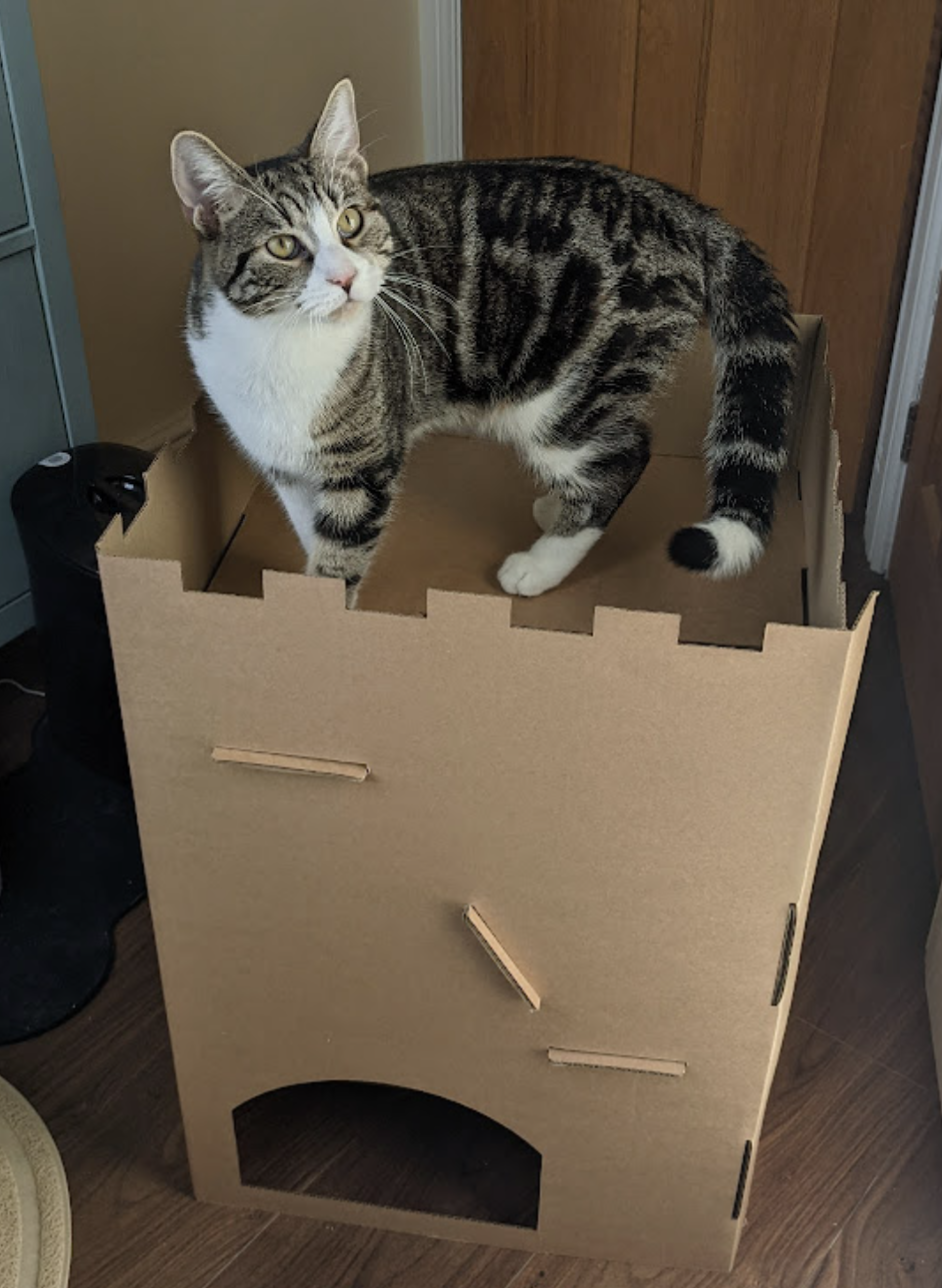
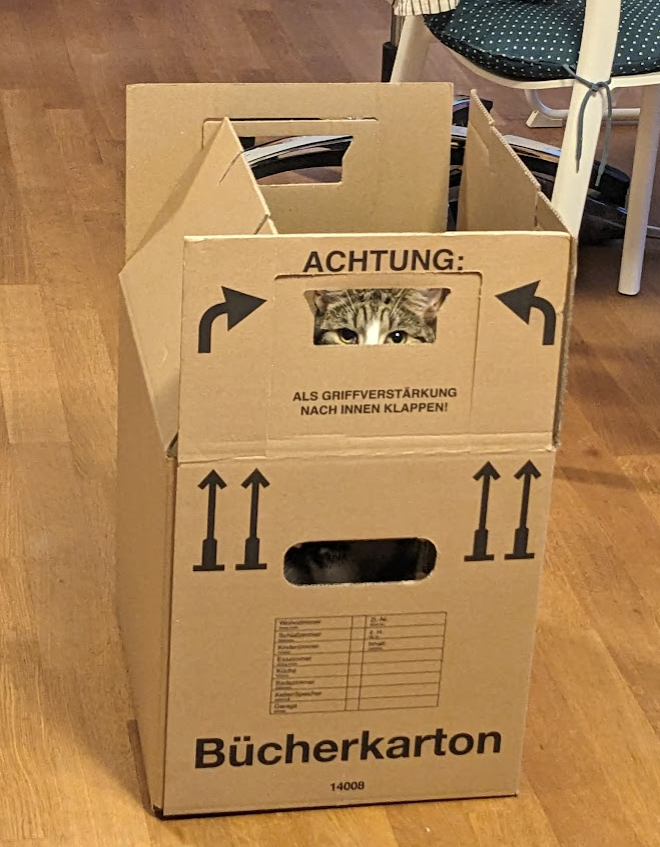
The bunny castle came from watching Winston sit in cardboard boxes. He liked cardboard, he liked enclosed spaces and the bunny castle gave him both. It was too small and he couldn't really get comfortable in it so I iterated. I got a bigger cardboard mansion thinking scale was the problem.
It wasn't the scale. Watching him I realised he wasn't interested in being inside the structure at all. What he actually wanted was to hide behind something and hunt. He wanted to feel like a predator with prey. That's a completely different need and no amount of cardboard was going to solve it.
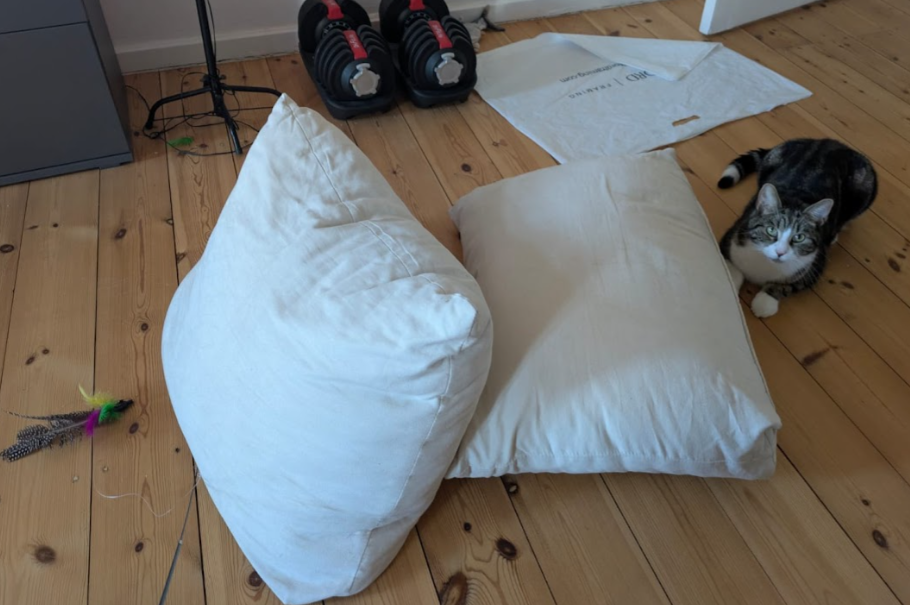
That's when I stopped buying things and started thinking about what I already had. Big floor cushions, the one feather toy he actually likes, played in the specific way he responds to. Winston hides behind the pillows, I move the toy the way he likes and he plays properly. It's the most low-tech solution of everything I tried and it works better than anything I bought.
It also doesn't live on the floor of my apartment permanently which after the cardboard mansion was a genuine relief.
The outcome
Winston still wakes me up sometimes. He's still unpredictable, still opinionated and still capable of ignoring something I was convinced he'd love. That hasn't changed and I've stopped expecting it to.
What did change was everything around it. The whining reduced. The 3am wake ups became less frequent. More than anything he just seemed to actually enjoy himself, which sounds simple but was the whole point from the beginning.
What I'd built without fully realising it wasn't a solution, it was an environment. The cat wall, the pillow fort, the bird feeder on the window, the one toy played in the one way he likes. None of those things work in isolation. Together they give Winston enough variety, enough stimulation and enough of a sense of having his own space that the boredom problem became manageable.
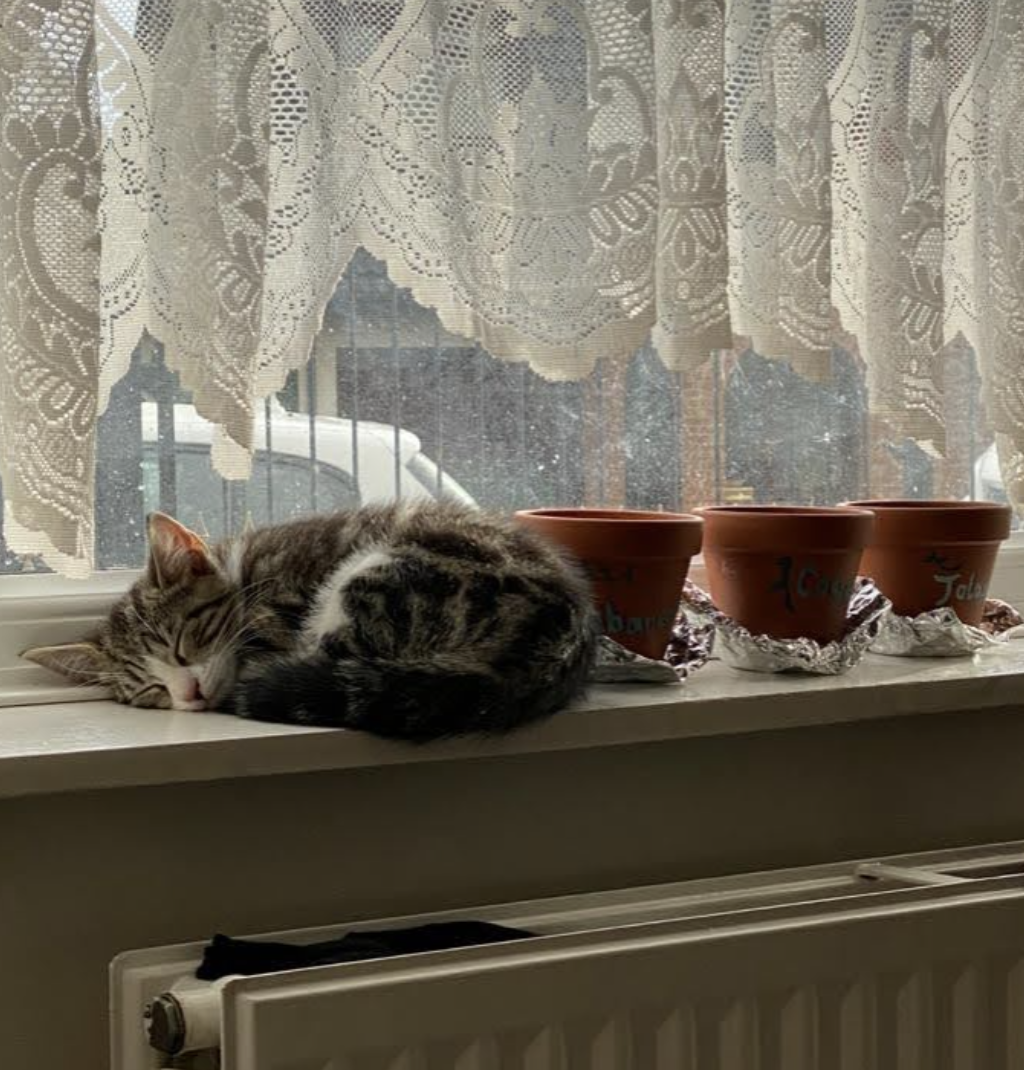
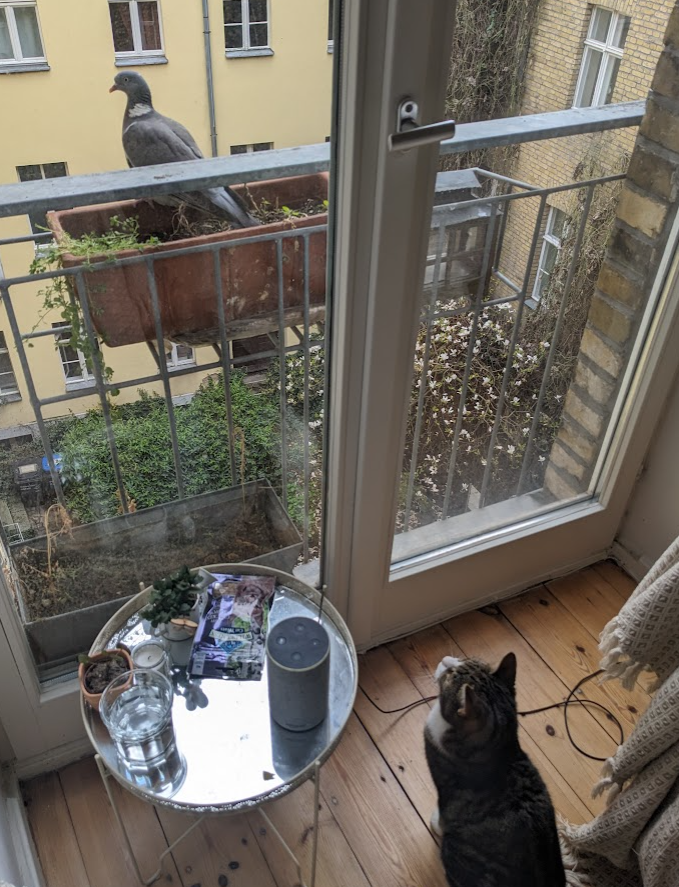
Some of the things that worked most weren't designed for cats at all. A pile of floor cushions. A bird feeder on a window ledge. Clean sheets. The things that came from just watching him rather than trying to solve him.
That's the part that stuck with me most. Not every user need has a product on the market that answers it. Sometimes the right solution is sitting in your observations the whole time and you just have to be willing to act on what you actually saw rather than what you assumed.
Cats are unpredictable and weird. So are users. The job isn't to find one perfect solution and ship it. The job is to keep paying attention.
Reflection
Winston is five years old and I'm still figuring him out. The environment I've built for him will change again, something will stop working, something new will surprise me and I'll have to start paying attention all over again. That's not a problem with the process. That's just what the process looks like when you're honest about it.
The thing this project taught me that I carry into every product problem is that the most dangerous moment in any design process is when you think you understand your user well enough to stop watching them. The teepee felt certain. The first cat wall felt certain. Certainty isn't the same as understanding and the gap between them is where most design decisions go wrong.
Good design isn't about having the right answer. It's about building the kind of process that gets you closer to it over time. Winston didn't teach me that. But he gave me five years of practice at it.